


Understanding Changes To Land and Buildings Transaction Tax
Amongst the many life decisions you will make, buying a house is one of the biggest and therefore one, which requires much time and consideration. With that said, we feel that not only is it important that you have all the information you require but also that, that information is reliable and up-to-date.
Changes to legislation are particularly relevant when buying a house as they may have a rather significant impact on your buying decisions. One of the most recent changes homebuyers may have experienced or may be interested in is that of the legislation surrounding stamp duty.
With changes first introduced in April of last year, stamp duty has now been replaced in Scotland, by Land and Buildings Transaction Tax, which is calculated according to the specific price bracket that the property you’re buying falls into.
New Rates
Changes such as these are important to consider when setting budget, as you may now be saving a significant amount of money, due to the new rates (listed below).
Up to £145,000 – 0%
£145,001 - £250,000 – 2%
£250,001 - £325,000 – 5%
£325,001 - £750,000 – 10%
£750,001 + - 12%
Further to this, new rates will be introduced as of April 1st 2016, which will involve a 3% surcharge for those buying additional residential properties, for purchase prices exceeding £40,000. This change in legislation applies to those, who for example, are interested in buy to let properties. The new rates are as below:
Up to £40,000 – 0%
£40,001 - £145,000 – 3%
£145,001 - £250,000 – 5%
£250,001 - £325,000 – 8%
£325,001 - £750,000 – 13%
£750,001 + - £15%
If you have any questions about Land and Buildings Transaction Tax or any other legislation regarding the purchase of a property, please contact our Conveyancing department on 0141 887 5271.


Constructing Schools in Ghana

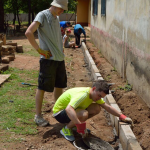
Giving something back to communities is something that at Walker Laird is very passionate about. Two of our staff Graham Paisley and Luke Eaton, of our Paisley office, went over and above in helping those in need by giving up their time to fly to Ghana and help build all new facilities at a new school this summer.
This level of dedication has impressed the whole team at Walker Laird, and we wanted to share their story from their time in Africa and just how their work will go to help children over there.
Inspired from a previous trip to Uganda two years ago, also to help construct important buildings, Luke was wanting to return to the continent and assist once again. For Graham, this sounded like a brilliant opportunity to give something back and signed up alongside Luke to go out to the village of Kaleo in Ghana for 17 days, both there as part of a team of nine to help build a teacher's dormitory at a new school.
Once they were both signed up, they worked hard at fundraising the money they needed to go over for the trip. After some hard work putting on dedicated fundraiser evenings, raffles and sponsored walks, they both met their target and were ready to embark on this trip.
They arrived in Accra, the capital city of Ghana, which both described as being as “a bit more upmarket”. From here they then had a 17 hour bus journey to the small town of Kaleo, where they would be spending the rest of their time to help construct the dormitory.
Arriving on the Sunday, they met with the builders on the Monday to go over the full project and understand exactly what work needed to be done. Graham and Luke’s team of nine were joined by another group, also from Scotland, who were building classrooms. During their time their, they all worked hard to construct these much needed areas for the school.
Supporting Education
In this school most of the kids who would be attending were not actually from Kaleo, but from outside. This is simply due to the fact that it still costs money for a child to attend. So over the 17 days they were there, Graham and Luke were able to get to know some of the local children and residents, including the village chief, who could be found enjoying a refreshing beer in the 40°C heat!
Since they returned, they both said that they would “go back in a heartbeat”, and have plans to return in a few years and volunteer once more. The experience has been an extremely positive one for Graham and Luke, and everyone here at Walker Laird are happy to have two such giving members of the team.
If you would like to find out more about how you can get involved with helping communities abroad, why not check out the charity Graham and Luke supported on their trip - Connected. Check out more of their pictures from the gallery below!








Our Easy Guide To Conveyancing
When it comes to buying or selling a house, a key part of the process involves conveyancing. For most people they understand the basics of what is required to buy a house and how to market it, but the conveyancing process still remains somewhat of a mystery, after all, it isn’t a word that comes up too often in day to day conversation is it?
So to help we have created a quick guide to help you understand the conveyancing process, helping to clear exactly what it is, what stages are part of it, how long it takes and help answer some of the most commonly asked questions around it.
Conveyancing...What is it?
In a nutshell, conveyancing is the legal process which takes place after the main details of buying or selling your house has been agreed. This usually involves a contract being created which confirms ownership of the property being transferred from one person to another, done by way of missives (an exchange of letters between the buyer's and seller’s solicitors).
The conveyancing process will also involve your solicitor carrying out additional searches on the property itself and the parties involved in the purchase. These searches are done to make sure the buyer gets and knows what they paid for and to make sure there will be no additional costs incurred after purchasing the home.
What are the stages?
Once an offer has been accepted, both parties solicitors will then work to negotiate the terms of the contract by completing what is known as “missives”. This entails a number of important tasks, including agreeing a date of entry as well as what (or any) additional items to be left in the property (this is commonly things such as blinds, kitchen equipment etc).
The next stage is to “conclude missives”, which simply means that the contract of sale and purchase of the property has been agreed between the buyer and seller. By this point you will have your entry date, funds secured and insurances arranged for the transfer.
Moving forward to the date of entry both the buyer and seller’s solicitors will arrange the successful transfer of the funds. Once complete and correct funds have been received, the new owner will be able to pick up their keys to their new home from either the seller themselves, the seller’s solicitor or the estate agent, leaving them free to begin moving in!
How long does this take?
There is no set timescale for the conveyancing stage, but on average it can take six to eight weeks. This can very easily be longer or shorter depending on the circumstances, everyone will be different. There are a number of factors to consider in a house purchase or sale that can vary the timescale, for example agreeing the initial terms of the sale or securing your mortgage from your chosen lender.
We have a vastly experienced conveyancing team here at Walker Laird who will help you every step of the way, regardless of your circumstances. If you have any questions about conveyancing or would like us to help you during this stage then please give us a call on 0141 887 5271.
If you have found our guide useful, share it with your community via the buttons below. For more news and updates from Walker Laird you can follow us on Facebook, Twitter and Linked In, as well as right here on our official blog.